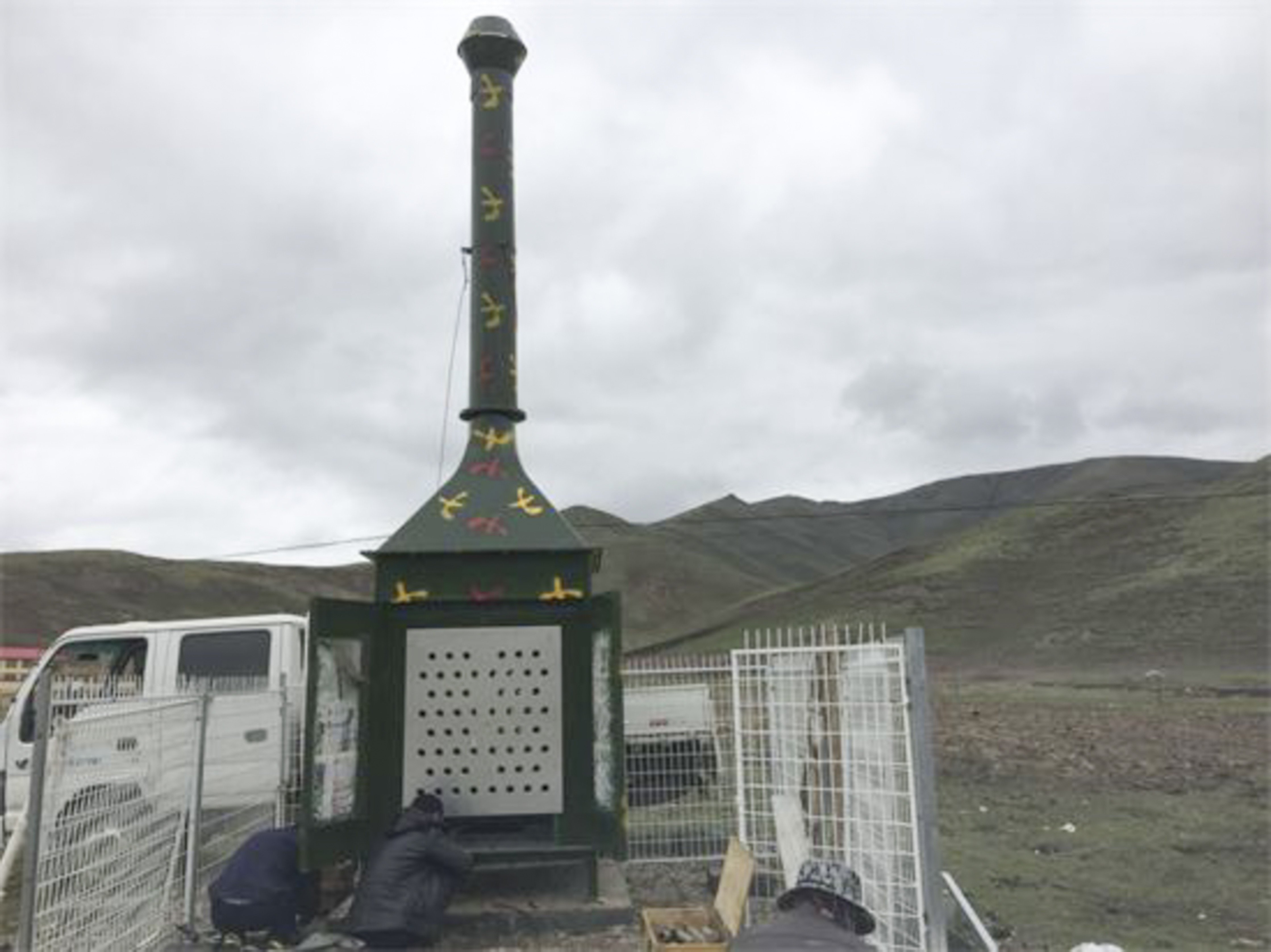
Whenever China decides to tackle large scale environmental problems, it acts swiftly, and drastically. From Mao deciding to eliminate sparrows, flies and mosquitoes in the 1960's, to more recent attempts to exterminate civet cats because they were suspected to be infected SARS, we have seen everything. More recently, China has embarked on tackling how to make it rain. This is definitely not the first time governments have attempted to make rain. Cloud seeding is used by the United States, Russia, and India as well. The idea is simple--to emit particles that help water condense on, since small droplets are NOT energetically stable without this. Without a particle to condense on water would rather remain in gaseous form. Unfortunately, it is almost impossible to prove that such a practice caused more rainfall than would have occurred without the seeding. But that hasn't stopped anyone from using the technique. Often times airplanes and jets are used to emit particles like Silver Iodide, but China has its own plan. It plans to use Tibet's high ground to have a large network of fuel-burning chambers that will seed clouds with silver iodide. The chambers are meant to draw air blowing from the south to blow the particles into the clouds. Each chamber is supposed to make 3.5 mile long strip of clouds, and the seeding will be guided by 30 weather satellites that will be tracking monsoons in the nearby Indian ocean.
Estimates say that the initiative should increase rainfall for a region that is 1.6 million square miles long. The reason for picking Tibet is twofold--other than the fact that the mountains are high, they are also a source of water for multiple rivers, including the Yellow, Yangtze, Mekong, Salween, and Brahmaputra. So this theoretically could help millions of people with freshwater in China and India. The optimist will say that cloud seeding on such a large scale has never been seen before, and if this truly "works," could cause waves around the world. However, there are plenty of problems with the system. It doesn't work when the wind is low, or if it is blowing in the wrong direction. Thus chances are it is probably an inefficient way to further pollute the atmosphere. The other fact is that even if such a large scale effort works, it means rain that is meant to occur somewhere else is occurring over Tibet. However this is less of a detractor since the rain could have been happening over a sea or ocean. Nevertheless, the repercussions for the environment are relatively unknown.
At the end of the day, we have to commend China for its decisiveness and lack of fear. Unlike other governments, China takes action and cannot be accused of a lack of trying. Hopefully, this initiative ends better than the extermination of sparrows or civet cats. The lack of sparrows increased locust populations that fed on crops, and had the civet cats actually had SARS, the epidemic would have been much further exacerbated.
A part of a cloud seeding chamber
Estimates say that the initiative should increase rainfall for a region that is 1.6 million square miles long. The reason for picking Tibet is twofold--other than the fact that the mountains are high, they are also a source of water for multiple rivers, including the Yellow, Yangtze, Mekong, Salween, and Brahmaputra. So this theoretically could help millions of people with freshwater in China and India. The optimist will say that cloud seeding on such a large scale has never been seen before, and if this truly "works," could cause waves around the world. However, there are plenty of problems with the system. It doesn't work when the wind is low, or if it is blowing in the wrong direction. Thus chances are it is probably an inefficient way to further pollute the atmosphere. The other fact is that even if such a large scale effort works, it means rain that is meant to occur somewhere else is occurring over Tibet. However this is less of a detractor since the rain could have been happening over a sea or ocean. Nevertheless, the repercussions for the environment are relatively unknown.
At the end of the day, we have to commend China for its decisiveness and lack of fear. Unlike other governments, China takes action and cannot be accused of a lack of trying. Hopefully, this initiative ends better than the extermination of sparrows or civet cats. The lack of sparrows increased locust populations that fed on crops, and had the civet cats actually had SARS, the epidemic would have been much further exacerbated.
Comments
Post a Comment